ADA Mobile Bathroom Rental: Understanding Available Toilet Room Demands
Renting portable toilets appears basic till ease of access goes into the conversation, and then it promptly comes to be clear that "common plus one bigger unit" is not a genuine compliance approach. People frequently request for an ADA mobile washroom as if it were a product classification you can check off with a solitary call. In technique, availability depends upon more than the shell of the unit. It relies on the number of devices in the collection, the route to the system, the entrance, the indoor clearances, and whether the arrangement works for the individual that in fact needs to use it.
That difference issues since mobile toilets appear in places where individuals have extremely little margin for inconvenience. A wedding guest utilizing a mobility device can not just "improvise" with a cramped device at the much edge of a muddy field. A moms and dad assisting an adult kid with a wheelchair impairment at an area event needs room and a useful door approach, not an excellent purpose. On a long event day, a restroom that is technically present but almost inaccessible is not much far better than no toilet at all.
If you are arranging an ADA mobile bathroom leasing, the best state of mind is to deal with accessibility as component of website planning, not as a device. The government baseline comes from the 2010 ADA Specifications for Accessible Layout, as translated by the Gain access to Board and the Department of Justice. Those criteria do not simply consider the bathroom fixture. They look at exactly how a person reaches the device, enters it, maneuvers inside it, and uses it with dignity and independence.
The initial inquiry is not the model, it is the setup
A lot of rental discussions start with the device itself. Is it an ada compliant mobile toilet? Is it one of the bigger ada-compliant portable toilets? Does it have grab bars? Those are fair questions, but they are insufficient on their own.
Accessibility for mobile bathrooms is evaluated in context. If there is a cluster of single-user portable commode devices, a minimum of 5 percent of the units because cluster should come. The Accessibility Board has actually explained that this applies even at short-term events. That factor captures people unsuspecting due to the fact that momentary setups are frequently treated casually. The law does not treat them delicately just because they are temporary.
That indicates an event bank, a fairground schedule, or a short-term restroom location at a public event requires scoping that make up easily accessible units in the collection. If somebody orders 10 units, the discussion can not quit at "we have toilets on site." The collection itself needs to include the called for obtainable provision.
This is additionally where language can misguide individuals. Terms like ada handicap easily accessible portable bathroom or ada obtainable portable restroom are generally used in the rental market, yet the valuable concern is not what the sales pamphlet calls the device. The beneficial question is whether the provided unit, in its mounted location, meets the relevant access requirements.
What the ADA is actually looking for
Portable bathroom ease of access has a sensible reasoning behind it. A restroom is just easily accessible if an individual can approach it, enter it, transform or place inside it as called for, and utilize the component and supports planned for risk-free transfer and security. The criteria as a result reach several various components of the experience.
The unit should be related to the International Icon of Ease Of Access. That sounds small, yet it matters. At crowded occasions, people must be able to situate the easily accessible device swiftly without guesswork. A person should not require to open up numerous doors or ask staff where the functional bathroom is.
There needs to additionally be an accessible path to the system and an available entrance. This is where many otherwise good configurations stop working. A compliant-looking device put past ruts, deep gravel, a high grade, or a lip that calls for aid is a trouble. If ramps or touchdowns are needed, they have to follow ADA technical needs also. The route and the entry are not optional side concerns. They are part of the accessible restroom.
Inside the unit, the technical requirements for bathroom spaces still use. That consists of indoor clearances, transforming room, door navigating clearances, and the relevant grab-bar and water-closet clearance policies. Those functions are the difference between "larger than typical" and actually functional. I have actually seen people presume that width alone addresses ease of access. It does not. A space can be visibly larger and still fail the handling or transfer needs that the ADA addresses.
Why positioning frequently causes the largest problems
If there is one lesson that comes up over and over in mobile restroom preparation, it is that a certified device can be weakened by a careless site strategy. You can get ada compliant available portable washrooms from a trustworthy supplier and still develop a poor result if the ground conditions and method are ignored.
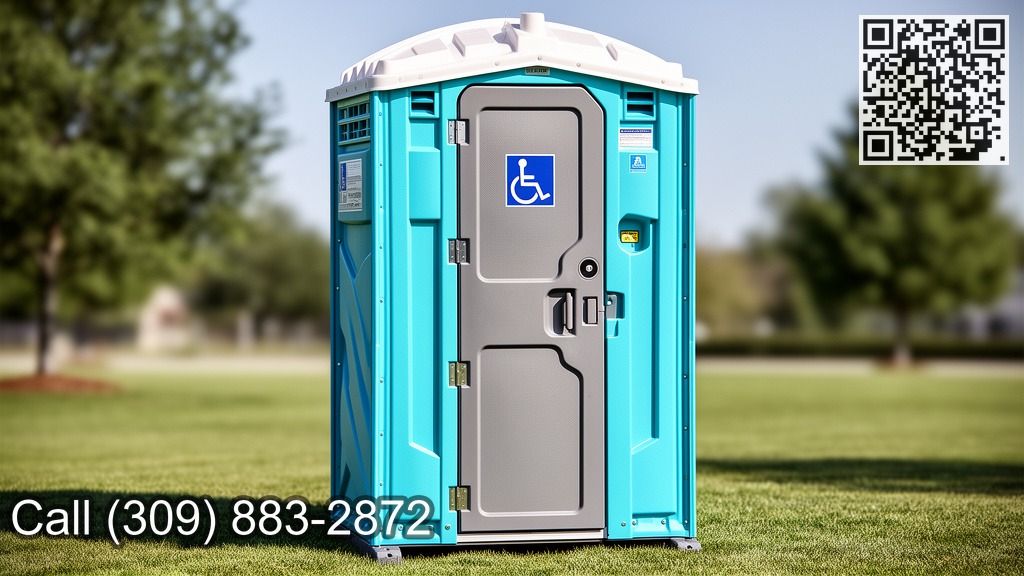
Picture a momentary event on lawn after 2 days of rainfall. The rental business delivers an ada portable bathroom that, on paper, is the ideal sort of unit. The event crew positions it next to the rest of the bank, however the only path crosses soft dirt that gets hold of at wheels and walkers. The easily accessible system is present, labeled, and difficult for numerous users to get to separately. Absolutely nothing regarding that result feels unusual to individuals that work occasions. It takes place due to the fact that ease of access obtains gone over late, after power, secure fencing, phase gain access to, vendor placement, and vehicle parking have already taken the very best terrain.
The better strategy is to choose the place with the easily accessible path in mind first. Secure ground, sensible access from the occasion course, enough method clearance at the door, and any type of required ramp or touchdown need to all be considered before the vehicle gets here. Once an unit is gone down into a confined or irregular area, there are restrictions to what can be fixed on the fly.
Temporary events still count
One of one of the most persistent misconceptions in this area is the idea that short-lived ways exempt. It does not function this way for public-facing mobile toilet collections. The Gain access to Board has particularly said the cluster need applies also at short-lived occasions. A one-day fundraising event, weekend food festival, or seasonal outdoor attraction still has to assume seriously about accessibility.
That is very important because momentary events are where people most often rely on portable cleanliness. Permanent washrooms may be too far away, closed, insufficient for crowd dimension, or completely missing. The temporary washroom location ends up being the main bathroom area. When that takes place, availability is not a side concern, it is a fundamental solution issue.
There is additionally a human side to this that does not constantly come with in legal discussions. Guests discover when they are treated as a second thought. If the ada mobile bathroom is concealed behind supply trailers, obstructed by trash carts, or parked where a mobility device customer needs assistance simply to unlock, that sends out a message. The event might not mean that message, yet people feel it anyway.
Construction sites are a narrower and commonly misunderstood exception
Construction brings its own complication due to the fact that individuals hear there is an exception and after that presume it uses broadly. The distinction is narrower than lots of people think.
The older 1991 requirement included an exemption from the portable-toilet https://pristineportablesil.com/events/ access scoping need for building websites where the devices are used solely by building and construction workers. That does not mean all mobile bathroom services are excluded. It does not indicate a public event hosted near construction can neglect access. And it does not clean away the wider guideline for general mobile commode arrangements serving the public.
This is one of those locations where a little partial understanding causes a great deal of problem. If the use is not limited to building and construction workers because specific context, the much safer presumption is that accessible mobile bathroom needs still matter. Any individual intending a public-facing site need to be really careful concerning leaning on the construction exception.
What to ask before you sign the rental order
People frequently wait until the day before distribution to ask the access inquiries that should have formed the order initially. A brief preparation conversation can protect against pricey shuffling, rushed replacements, and a lot of aggravation for guests.
Here are the questions worth resolving early:
- How many portable toilet devices will be in each cluster, and just how will the accessible-unit demand be met?
- Where is the obtainable route from arrival locations or occasion courses to the restroom location?
- Is the chosen positioning secure enough, degree sufficient, and open enough for the device's entrance and door handling needs?
- Will any ramp or landing be required, and if so, will certainly it meet ADA technological requirements?
- Is the available system clearly identified with the International Icon of Accessibility?
That list is short intentionally. You do not require a lawful memorandum to improve the outcome. You need the best inquiries while there is still time to make useful changes.
The expression "ADA certified" deserves a 2nd look
In marketing, "ADA compliant mobile bathrooms" and "ADA certified mobile bathrooms" know expressions. They work shorthand, however they can lull people into thinking the work is done. The expression by itself does not assure that the unit, the course, and the installation together fulfill the standard.
A service provider may accurately explain a version as an ada compliant mobile bathroom in the sense that the unit is made for accessible use. However the finished outcome depends upon site conditions and setup. The route may be hard to reach. The door strategy might be blocked. The cluster may have too couple of easily accessible devices. The identification might be missing. An absolutely obtainable installation is a combination of equipment and execution.
That is why seasoned organizers often tend to push for specifics as opposed to tags. They speak about where the device will certainly sit, exactly how visitors will certainly reach it, that is inspecting problems on website, and whether the last design protects the clearances the unit needs to operate as intended.
Real-world judgment matters because not every website is easy
Portable toilets are often needed in imperfect environments. Open up fields, car park under reconfiguration, active celebration grounds, roadside events, and short-lived workplace all develop constraints. The ADA requirements still apply, but the course to satisfying them might require more judgment than individuals expect.
A gravel whole lot is a good example. Some gravel surface areas are small and fairly navigable. Others are loose enough to produce immediate movement obstacles. 2 websites can look similar in a photo and behave really differently under wheels, canes, and walkers. The exact same chooses yard. A completely dry grass may work where a wet grass falls short by noontime. If you have an option between a picturesque positioning and a functional one, accessibility generally requires the sensible one.
Another persisting concern is crowd circulation. Occasionally the easily accessible unit is mounted in an area that was great at arrangement, after that comes to be boxed in by barriers, vendor lines, colders, or event décor. This is specifically typical when different teams deal with different parts of the website. The bathroom vendor does one point, the event procedures crew does another, and no person examines the entire path again after final arrangement. By opening up time, the easily accessible course is compromised.
The repair is not extravagant. Someone has to walk the route and look at the actual problems from the individual's point of view. Can somebody locate the unit, reach it, approach the door, and use it without improvisating? That basic examination captures more issues than a pile of order forms.
The scoping policy appears straightforward, but counting clusters calls for attention
The demand that at least 5 percent of units in each cluster come is simple at a high degree, yet the word "cluster" is entitled to focus. Portable commodes are often spread throughout a site in banks or teams as opposed to dealt with as one huge stock count. That matters because availability requires to be present where people in fact come across the units.
If an event has a number of different bathroom financial institutions, planners ought to assume carefully about each organizing instead of thinking one obtainable system someplace on the grounds resolves every little thing. Range, surface, and flow patterns all influence functionality. A person ought to not have to take a trip much previous numerous unattainable devices to discover the one they can use.
This is one more factor to prevent final restroom planning. As soon as the clusters are outlined, utility paths are developed, and fencing is installed, relocating devices to deal with scoping or transmitting errors comes to be harder and even more expensive.
Accessibility is part of a larger compliance climate
Even if your immediate worry is an ada mobile bathroom service for one website, it aids to understand the broader instructions of ADA enforcement. Availability expectations are not reducing. They are being addressed throughout even more parts of business life, consisting of digital access. In 2026, the Department of Justice prolonged the due date for sure state and local government web and mobile ease of access guidelines to April 26, 2027 for bigger entities, which mirrors a broader conformity environment as opposed to a narrow focus on buildings alone.
That more comprehensive context matters because it alters just how companies should believe. Access is not a one-off procurement concern. It is a functional habit. The same mindset that enhances site gain access to, occasion access, and client interaction need to also shape washroom preparation. When teams deal with ease of access as basic planning rather than exception handling, the quality of choices enhances throughout the board.
Common blunders that create avoidable trouble
Most ease of access failings in portable bathroom setups are not mystical. They have a tendency to come from rushing, assumptions, or fragmented responsibility.
A few of one of the most usual troubles consist of:
- ordering a solitary obtainable system without checking whether the cluster count requires more
- placing the device on a course that becomes muddy, soft, or obstructed
- assuming a large system is compliant without validating the full installation conditions
- forgetting visible recognition with the International Icon of Accessibility
- treating short-lived occasions as if availability regulations are optional
None of these are exotic technological catches. They are normal planning misses out on. That is in fact good news, because common preparation misses can be prevented.
Choosing empathy over minimums
There is a lawful baseline here, and it matters. But there is also a quality-of-service inquiry that is worthy of equivalent attention. Individuals using easily accessible mobile toilets are not requesting unique treatment. They are asking for the very same standard self-reliance everybody else anticipates from a bathroom visit.
That point of view alters the tone of the preparation conference. Rather than asking, "What is the minimal ada portable commode requirement we can escape?" A far better question is, "Will this configuration job efficiently for someone showing up on website without needing to bargain for help?" Those two questions can result in very different site decisions.
Empathy also helps with side situations. As an example, if a route technically exists but will clearly deteriorate under rain or rush hour, a knowledgeable planner does not wait for grievances. They adjust the strategy. If the only easily accessible unit is likely to be tough to find in a congested field, better wayfinding is added. If the bathroom financial institution will certainly be bordered by lines and barriers, added treatment is taken to maintain method room. That is not overbuilding. It is appreciating exactly how individuals in fact use the site.
A much better basic for ADA mobile washroom planning
When individuals look for terms like ada-compliant portable toilet, ada compliant portable bathrooms, or ada handicap obtainable mobile toilet, they are normally attempting to fix one practical problem: they wish to give a bathroom that is legal, workable, and considerate. The obstacle is that no solitary expression catches the full requirement.
An easily accessible mobile restroom configuration needs to be counted correctly within its collection, determined effectively, obtainable by an accessible course, entered with a certified entryway, and useful inside under the applicable toilet-room technical needs. Those pieces interact. Leave one out, and the setup may fail the individual it was suggested to serve.
The great news is that the path forward is not mysterious. Begin early. Strategy the website, not just the rental order. Confirm the accessible course and entrance. Remember that temporary occasions still count. Beware with exemptions that use just in narrow construction-site circumstances. And do not let the label on the sales brochure substitute for a genuine testimonial of the installed conditions.
That is what responsible ADA portable washroom preparation resembles. It is less about inspecting a box and even more concerning seeing to it every visitor or customer can satisfy a very normal need without barriers, shame, or dependence on a person else's help.
 Ask ChatGPT
 Ask Grok
 Ask Perplexity
 Ask Claude
 Ask Google AI
 Ask You