ADA Mobile Bathroom Guidelines for Momentary Occasions Described
If you are planning a festival, street fair, outside wedding event, charity run, county event, or pop-up area celebration, toilet gain access to is never ever a side issue. People bear in mind whether an event really felt welcoming, and absolutely nothing forms that feeling faster than whether they can really use the facilities provided. For visitors with movement handicaps, a common portable unit may not work at all. That is where ADA rules matter, and where a great deal of occasion coordinators obtain stumbled up.
The excellent news is that the core structure is not mystical. The government requirement that controls this area is the 2010 ADA Specifications for Accessible Design, as translated by the united state Access Board and the Department of Justice. For momentary occasions, the standard expectation is uncomplicated: if you offer collections of portable single-user bathroom units, a minimum of 5% of the systems in each collection should come. That rule uses even at short-lived events.
That sounds simple on paper. In the area, though, compliance often breaks down in the information. A supplier provides an ada portable restroom, yet it gets positioned on soft turf without stable course. A coordinator orders one ada certified portable toilet for a huge place, however spreads restroom financial institutions across the site and neglects that the 5% rule uses by cluster, not simply to the total count. An unit gets here with the ideal impact however no useful accessibility due to the fact that the access area is blocked. Those are the errors that matter.
The regulation lots of people require to understand first
For portable single-user commodes grouped together in a cluster, a minimum of 5% of the units in that collection should be accessible. If you have a momentary occasion with numerous toilet groupings spread around the premises, you do not want to believe only in terms of a sitewide grand total. The collection matters.
That point obtains neglected greater than it should. Picture an event with one bank of restrooms near the entrance, another by the food area, and one more near the efficiency room. If only one area has an ada available portable bathroom, a person who needs it might be forced to go across a large site, navigate crowds, or travel over irregular surface just to get to a commode. The guideline is indicated to stop that kind of practical exclusion.
Because the criterion is percentage-based, the precise system matter relies on the number of mobile bathrooms remain in each cluster. The legislation talks in percents, not in a one-size-fits-all event number. In technique, occasion organizers ought to talk about collection layout early, not after the truck is currently on the road.
An easily accessible unit is more than a broader box
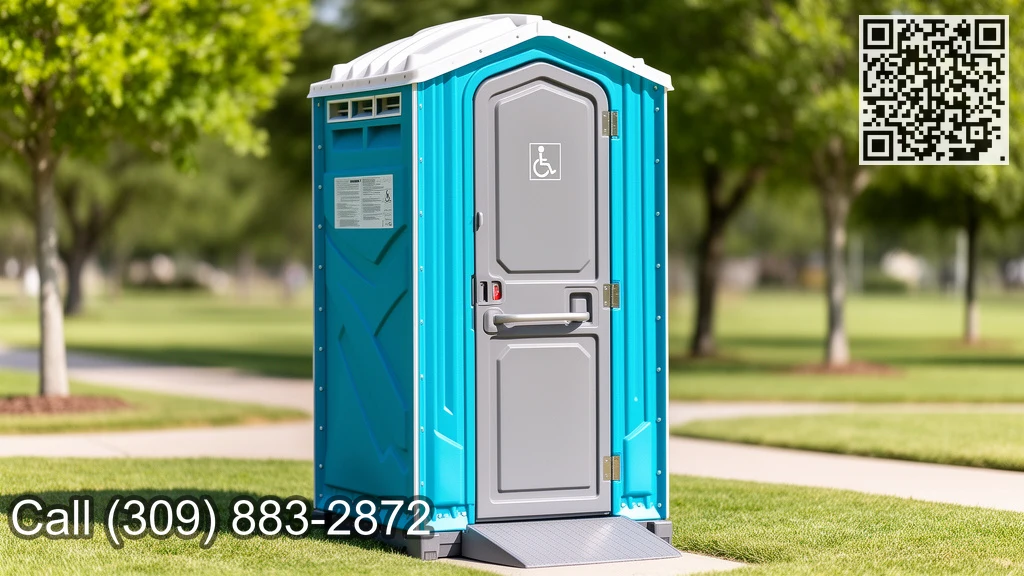
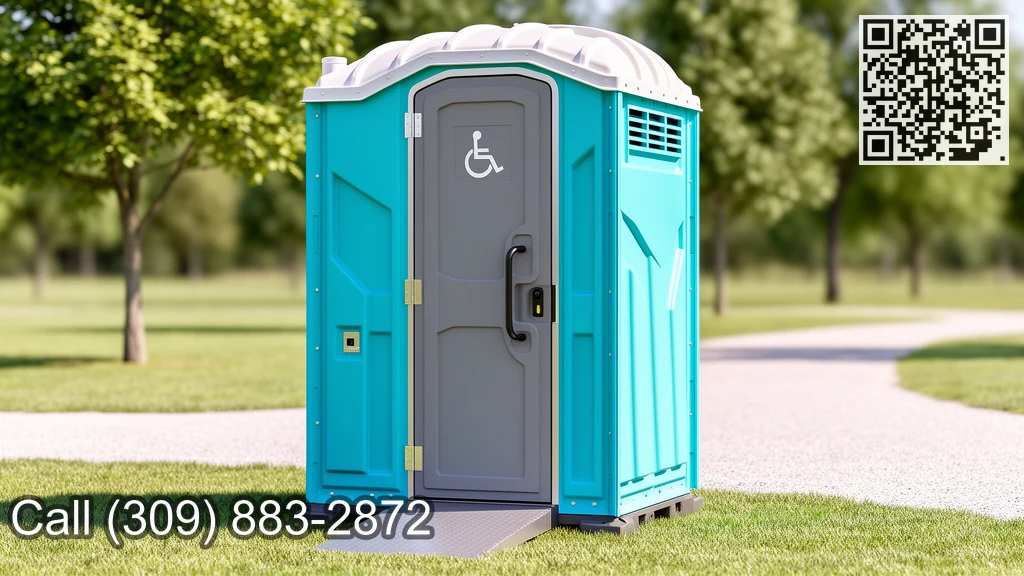
A great deal of people use the phrase ada mobile bathroom as if it merely suggests a larger mobile restroom. Dimension matters, however it is only component of the image. An accessible system should additionally meet toilet-room technical needs. Those consist of interior clearances, turning space, door steering clearances, and relevant policies for grab bars and water-closet clearances.
This is where professional judgment aids. It is inadequate for an unit to be marketed delicately as wheelchair-friendly or spacious. If the device does not in fact provide the technological attributes needed for accessibility, the tag does not address the trouble. When somebody asks whether they need an ada certified easily accessible mobile restroom or a typical luxurious device, the response is that convenience upgrades and lawful availability are not the same thing.
The unit need to additionally be related to the International Icon of Accessibility. That may feel like a small detail, yet it matters on active occasion premises. Clear recognition assists visitors find the right device without needing to open up doors, ask personnel, or browse a line simply to find whether a washroom is functional for them.
Placement is where numerous events silently fail
An ada certified portable toilet can still be effectively pointless if it is positioned terribly. The system has to have an accessible path and entry, and any type of needed ramps or touchdowns should adhere to ADA technical demands. In ordinary language, reaching the toilet belongs to ease of access, not an optional extra.
This is just one of the hardest lessons for temporary-event teams due to the fact that outdoor websites are hardly ever ideal. Area slope. Gravel changes. Rainfall modifications everything in an hour. A path that looks passable throughout arrangement may become hard after foot website traffic spins the ground. Organizers often concentrate so greatly on ordering the correct system that they fail to remember to ask the next inquiry: can a visitor really get to and enter it with self-respect and sensible independence?
I have actually seen occasion maps where the ada handicap obtainable mobile washroom was technically existing, yet tucked behind barricades, parked past a lip in the pavement, or put where service cars partly obstructed the door swing. On paper, the box was examined. https://pristineportablesil.com/emergency-services/ On website, the experience was bad. Accessibility is judged in use, not in theory.
A functional method to consider it is this: the course should make sense to a genuine person showing up in a wheelchair, utilizing a walker, or requiring additional handling area. If the path requires going across mud, aesthetics without a certified therapy, or a steep improvisated ramp, you should think you have a problem.
Temporary does not indicate exempt
This is just one of the most common misconceptions. Some organizers hear the phrase temporary event and think ease of access policies are looser. They are not, at least not in the method many people really hope. The Gain access to Board has made clear that the accessible mobile bathroom scoping uses also at temporary events.
That matters for short-duration gatherings just as high as for multi-day festivals. A one-day fundraising event still needs to be planned properly. An area event still needs accessible hygiene. The law does not treat a brief event as a free pass to ignore access.
There is, however, a crucial distinction in the broader background of portable commode rules. The older 1991 standards had an exemption related to construction-site portable bathrooms made use of solely by construction employees. That slim context triggers confusion because individuals find out about it previously owned and think mobile units as a whole are excluded. They are not. For general ada mobile commode rental usage at occasions, the accessible-unit requirement continues to be relevant.
What event coordinators need to ask their rental company
Portable bathroom vendors differ. Some know the ease of access requirements cold. Others utilize loosened sales language that can leave organizers with the incorrect tools. If you are getting systems for a public occasion, quality issues more than jargon.
Ask direct inquiries and get direct solutions:
- How several systems remain in each cluster, and the number of easily accessible systems are being provided for each and every cluster?
- Does each easily accessible device meet ADA toilet-room technical demands, including clearance and maneuvering space?
- Will the unit arrive marked with the International Sign of Accessibility?
- What does the vendor demand from the site to give an easily accessible route and entrance?
- If a ramp or landing is needed, that is accountable for ensuring it complies?
Those inquiries do 2 things. First, they force the preparation discussion right into specifics. Second, they reveal extremely rapidly whether the supplier deals with accessibility as an actual conformity problem or as an afterthought. If the answers are unclear, keep asking.
Why the site plan matters as high as the order form
An obtainable washroom is never ever just a rental thing. It is a site-planning concern. The placement of auto parking, drop-off points, paths, fencing, ticketing, food service, phases, and washroom banks all influence whether the commode gain access to really works.
At momentary occasions, it is common to develop the design around group circulation and then squeeze in sanitation at the end. That series commonly develops availability trouble. The far better strategy is to make a decision early where each cluster belongs, just how guests will certainly reach it, and whether each location can support an ada certified mobile restroom with a really easily accessible approach.
This issues specifically on large grounds. If you have washrooms in a number of areas, visitors should not have to travel from one end of the occasion to one more to find the only ada compliant mobile toilets. The cluster rule already presses in that direction, but thoughtful design goes even more. It thinks about how individuals move via the event at various times of day and whether obtainable washroom gain access to stays realistic when crowds build.
One information that gets undervalued is queueing room. Also if the unit itself is compliant, a severely handled line can choke off gain access to. Temporary fence, stanchions, and crowd-control obstacles need to not narrow or obstruct technique to the easily accessible unit.
Common blunders that are easy to prevent
Most restroom access failures at events are not exotic lawful problems. They are average planning blunders that compound.
The first is under-ordering obtainable devices due to the fact that the organizer computes 5% across the whole event instead of within each cluster. The 2nd is getting the ideal unit type yet setting it on a path that is not easily accessible. The 3rd is presuming that any kind of oversized mobile toilet is immediately ADA compliant. The fourth is neglecting identification signs. The fifth is dealing with setup as final, even when weather or site adjustments make the course worse by event time.
None of those mistakes require poor intent. They generally come from hurry, fragmented responsibility, or weak interaction in between the location, coordinator, and rental firm. That is why a site walk, even a quick one, often conserves problem. It compels every person to consider the same ground conditions and discover the very same pinch points.
The technological side, without claiming every event is the same
People commonly desire a basic global list, however mobile restroom conformity has technological elements that resist faster ways. The appropriate standards cover things like fixture clearances, turning room, navigating clearances at doors, and grab-bar and water-closet clearance rules. Those are not information to rate from memory.
For that reason, a cautious coordinator avoids making assumptions based upon look alone. One design may look similar to another and still vary in a way that affects usability. One website may appear degree till you account for the slope at the doorway. One entryway may appear vast sufficient up until a barrier or wastebasket modifications the handling space.
This is likewise where compassion issues. For lots of guests, a restroom issue is not a small hassle. It can require them to leave early, avoid food and drink, skip the event completely, or depend on aid they prefer to not require. People notice whether gain access to was treated as real friendliness or as marginal compliance.
When multiple washroom banks are spread throughout a venue
Large momentary events usually split hygiene into a number of financial institutions for functional factors. That can be wise group management, yet it raises the risks for intending easily accessible devices appropriately. Since the 5% guideline relates to each cluster, a dispersed format requires distributed accessibility.
Think via usage patterns rather than simply head counts. The family members location may need an accessible option close by. The concert field might need one that remains reachable even when the primary audience area obtains loaded. The vendor village may require its own available provision if visitors spend extended periods there.
This is not a matter of gold-plating the website. It is the useful repercussion of how people experience distance, terrain, and blockage. A guest with restricted flexibility may not have the ability to relocate across a vast place just because the only ada-compliant portable bathrooms were focused at the entrance.
What "accessible course" truly suggests in event preparation terms
The official basic uses the phrase accessible route, and that expression lugs even more weight than several teams realize. It is not merely "there is some way to arrive." It indicates the course itself must be accessible, and if a ramp or touchdown is called for, it needs to please ADA technical requirements too.
On long-term sites, route planning can be more straightforward since the infrastructure is already developed. Momentary occasions are trickier. Organizers might require to adapt car park, fairgrounds, streets, lawns, or open fields. That produces judgment phone calls, specifically where weather, short-term floor covering, and grade changes come into play.
A helpful planning behavior is to evaluate the route as a visitor would experience it from arrival to washroom door. Beginning at the likely drop-off or entry point. Follow the course. Seek abrupt degree changes, pinch points, unsteady surfaces, and anything that would interfere with door maneuvering. If the answer to any of those concerns is "team can aid," that is typically a sign the arrangement is entitled to another look. Help may be appreciated, but it is not an alternative to an obtainable route.
Language issues when you book units
In the rental market, you will certainly listen to numerous phrases: ada mobile washroom, ada accessible mobile bathroom, ada compliant mobile toilets, ada certified portable toilet, also ada-compliant portable commode with a hyphenated form in item summaries. The wording varies, but the concern is not branding. The issue is whether the unit and its placement please the suitable ADA requirements.
That is why I constantly motivate organizers to pass labels quickly and speak about features and conditions. How many systems per cluster? Which version is being delivered? What clearances does it provide? Is it significant with the availability sign? What is the route? Who validates the entry condition on website? Those concerns matter more than whichever phrase shows up on the invoice.
The very same goes with searches like ada mobile commode service. Look terms are useful for finding vendors, however they do not guarantee the supplied arrangement will be compliant. Genuine compliance happens when the right system arrives, in the appropriate number, at the right location, with the best access.
A note on enforcement and why this keeps obtaining much more attention
Accessibility conformity becomes part of a broader environment of enforcement and spotlight, not a fading worry. Federal ADA conformity task continues throughout markets. One current sign of that bigger landscape is the Department of Justice advice affecting internet and mobile access target dates for state and local governments. That advice is not concerning mobile bathrooms especially, however it reflects a broader truth: access obligations are active, visible, and increasingly hard for organizations to ignore.
For short-term occasions, that implies washroom accessibility should be dealt with as component of the very same total compliance mindset as ticketing, communications, courses, and place gain access to. The days when coordinators might deal with ease of access as a particular niche concern are long gone.
If you are trying to remain practical, concentrate on these priorities
When event teams feel overloaded, I typically recommend narrowing focus to the factors with the biggest real-world impact.
- Count washroom devices by cluster, not simply by event total.
- Make certain a minimum of 5% of each cluster is accessible.
- Confirm the available unit really meets ADA technological restroom requirements.
- Provide an available path and entrance, including certified ramps or touchdowns if needed.
- Check that the system is identified with the International Icon of Accessibility.
Those 5 priorities will certainly not address every site-specific inquiry, but they cover the issues that usually make or damage usability.
The human side of getting it right
There is a difference between staying clear of issues and creating an event where individuals really feel considered. Obtainable restrooms sit right at that divide. If you have ever attended an occasion with a parent using a mobility device, an older loved one with a pedestrian, or a friend recuperating from surgical treatment, you know just how rapidly a washroom problem ends up being everybody's concern. Plans change. Time obtains shed. Tension surges. What must have been an easy minute turns into logistics and embarrassment.
By comparison, when ada certified easily accessible portable restrooms are appropriately positioned, plainly marked, and easy to reach, most guests never require to consider them. That is the goal. Ease of access works best when it really feels ordinary.
Temporary events have sufficient relocating parts currently. Climate changes, vendors run late, web traffic reroutes, and grounds conditions change. But bathroom ease of access is among the locations where early attention settles. Order the ideal systems. Count by cluster. Shield the route. Check the entrance. See to it the symbol shows up. Those are not attractive tasks, however they are the work that turns gain access to from an assurance right into something real.
And for the visitor determining whether your event feels open up to them, that difference is everything.
 Ask ChatGPT
 Ask Grok
 Ask Perplexity
 Ask Claude
 Ask Google AI
 Ask You